Predictive Analytics in Healthcare: Driving RAF Accuracy, Care Gap Closure & Cost Reduction
Table of Contents
From Retrospective Reporting to Proactive Care
Healthcare organizations are under increasing pressure to improve outcomes while managing cost especially within Medicare Advantage, Medicaid, and D-SNP populations. Traditional analytics, which rely heavily on retrospective reporting, are no longer sufficient in a value-based care environment.
To succeed, organizations must shift from looking backward to anticipating what comes next.
Predictive analytics enables this shift. By leveraging historical data, machine learning, and advanced statistical models, healthcare organizations can identify risks, prioritize interventions, and act earlier—before adverse events occur.
However, the real value of predictive analytics is not just in generating insights – it is in operationalizing those insights within clinical and administrative workflows.
Improving Outcomes Through Predictive Insight
When predictive models are effectively embedded into care delivery, they enable more proactive, targeted, and efficient interventions.
Identifying High-Risk Members Earlier
Predictive models analyze data across claims, clinical records, pharmacy, labs, and social determinants of health to identify members at risk of:
1. Chronic disease exacerbation
2. Hospitalization
3. Gaps in care
This allows care teams to intervene earlier often days or weeks before a critical event improving outcomes and reducing avoidable utilization.
Reducing Readmissions and Total Cost of Care
Readmissions remain a key driver of cost and quality performance. Predictive models identify high-risk discharges and enable targeted follow-up strategies, such as:
1. Post-discharge outreach
2. Medication reconciliation
3. Care coordination
Organizations leveraging predictive analytics can reduce readmissions by 10–20%, while improving performance against value-based benchmarks.
Optimizing Risk Adjustment and RAF Capture
Accurate risk adjustment is foundational to financial performance in value-based care.
Predictive analytics helps:
1. Identify suspected conditions not yet documented
2. Prioritize high-impact members for outreach or evaluation
3. Improve recapture rates year-over-year
When operationalized effectively, organizations can improve RAF accuracy by 5–10%, while strengthening compliance and audit readiness.
Closing Care Gaps More Effectively
Predictive models enable prioritization of care gaps based on:
1. Clinical impact
2. Likelihood of closure
3. Member engagement probability
This drives more focused outreach and improves care gap closure rates by 15–25%, directly impacting Stars and HEDIS performance.
Driving Operational Efficiency at Scale
Beyond clinical outcomes, predictive analytics plays a critical role in optimizing operations.
Smarter Resource Allocation
Predictive models forecast:
1. Admission volumes
2. ED utilization
3. Seasonal demand patterns
This enables more efficient staffing and reduces unnecessary labor costs while maintaining service levels.
Reducing Administrative Waste
Predictive analytics can streamline administrative workflows by:
1. Identifying claims at risk of denial before submission
2. Predicting patient no-shows and optimizing scheduling
3. Automating prioritization of work queues
This reduces manual effort and improves operational throughput.
Optimizing Supply and Resource Planning
Forecasting demand for medications, equipment, and services helps reduce:
1. Waste from expired inventory
2. Supply shortages
3. Overstocking costs
From Insight to Action: Where Organizations Fall Short
Many healthcare organizations already have access to data but struggle to translate insights into action.
Predictive models alone do not drive outcomes. The real value comes from embedding insights directly into workflows, including:
1. Surfacing care gaps at the point of care
2. Triggering outreach for high-risk members
3. Guiding clinical decision-making in real time
Without this integration, predictive analytics remains retrospective rather than actionable.
The Foundation: Data That Can Be Trusted
The effectiveness of predictive analytics depends entirely on the quality and structure of the underlying data.
A strong data foundation includes:
1. A longitudinal patient record across claims, clinical, pharmacy, and SDOH data
2. Timely data ingestion to enable near real-time insights
3. Identity resolution across disparate systems
4. Governed data pipelines to ensure accuracy, traceability, and auditability
Without these elements, predictive outputs become unreliable – limiting both clinical and financial impact.
Incuvio’s Approach: Operationalizing Predictive Analytics
At Incuvio, we focus on more than just analytics we enable organizations to activate insights within their workflows.
Our approach combines:
1. Data strategy and integration to create a unified, trusted data foundation
2. Predictive models tailored to risk adjustment, care management, and quality
3. Workflow integration to ensure insights are actionable at the point of care
4. Scalable architecture to support growth across populations and programs
This allows health plans and provider organizations to move from:
· Retrospective reporting → Real-time decision support
· Fragmented workflows → Coordinated, intelligent operations
· Missed opportunities → Measurable performance improvement
Looking Ahead
The future of healthcare belongs to organizations that can anticipate needs, prioritize interventions, and act with precision.
Predictive analytics is no longer a differentiator – it is a necessity. But success depends on the ability to translate insight into action.
Organizations that get this right will not only reduce costs, but also deliver higher quality, more proactive care to the populations they serve.
Ready to Turn Insight Into Action?
Incuvio helps health plans and provider organizations operationalize predictive analytics driving RAF accuracy, care gap closure, and cost reduction through integrated data and workflow strategies.
Connect with our team to learn how we can support your transition to scalable, value-based care.

You may also like
 Articles
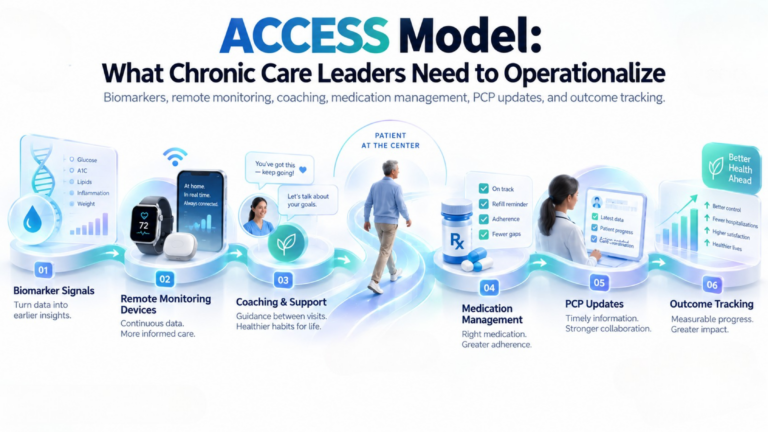
ACCESS Model: What Chronic Care Leaders need to Operationalize
The CMS ACCESS Model has moved from policy concept to operating reality. […]
 Articles
Why Health Plan AI Pilots Fail to Scale
Health plans are investing heavily in AI across predictive analytics, risk adjustment, […]
 Articles
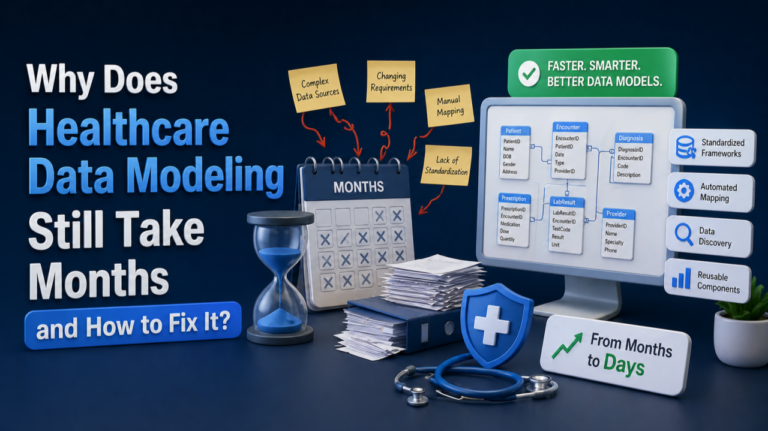
Why Healthcare Data Modeling Takes So Long and How to Fix It
Every healthcare data leader knows the drill. Clinical leadership asks for a […]