
Table of Contents
Health plans are investing heavily in AI across predictive analytics, risk adjustment, clinical NLP, utilization management, and administrative workflows.
In a controlled pilot environment, these initiatives often show promising results. The challenge comes when organizations try to move from a successful pilot to enterprise-wide adoption.
Performance becomes harder to sustain. Integration complexity increases. ROI becomes more difficult to demonstrate. And in some cases, instead of reducing administrative burden, the technology creates additional validation and workflow steps.
The problem is often not the AI model itself. It is the data and technology foundation underneath it.
The Risk of Layering AI on Fragmented Architecture
AI depends on reliable, connected, and well-governed data.
Many health plans are still operating across disconnected Medicare and Medicaid systems, fragmented provider data, legacy platforms, and separate clinical and operational databases.
When those systems are not aligned, AI inherits the same limitations. Two issues tend to follow.
1. Inconsistent Data Produces Inconsistent AI Outputs
AI can process large amounts of information quickly, but the quality of the output still depends on the quality of the underlying data.
If member records are incomplete, provider mappings are inconsistent, or claims and clinical data do not align, AI recommendations become harder to trust.
That can affect areas such as risk adjustment, quality performance, value-based care analytics, and care management.
Before scaling AI, health plans need confidence that the underlying data is accurate, standardized, and sufficiently connected.
2. AI Can Create Additional Administrative Work
The purpose of AI is often to reduce manual effort.
But if clinical or operational teams do not trust the output, they begin validating recommendations manually, reconciling data across systems, or creating additional review steps.
The result is an unintended administrative layer.
Instead of simplifying the workflow, the technology becomes another system that teams need to manage.
For AI to scale, users need confidence not only in the model but also in the data, workflow integration, and governance supporting it.
Scaling AI Requires a Pragmatic Technology Roadmap
Enterprise AI adoption is not simply a model-selection exercise. Health plans need to understand whether their current architecture can support AI at scale.
That means evaluating how data is ingested, standardized, governed, secured, and made available across the organization. It also means understanding how AI will fit into existing clinical, administrative, and operational workflows.
A scalable AI strategy should answer questions such as:
- • Is the underlying data reliable enough to support the use case?
- • Can the required systems exchange data consistently?
- • How will AI outputs enter existing workflows?
- • Who owns governance and oversight?
- • How will performance and business impact be measured?
- • Can the architecture support broader adoption if the pilot succeeds?
These questions need to be addressed before moving from experimentation to enterprise deployment.
How a Fractional CTO Can Help
Building the foundation for enterprise AI requires both technical depth and executive-level technology strategy.
For healthcare organizations that do not require a full-time Chief Technology Officer, a Fractional CTO can provide focused leadership during this transition.
A Fractional CTO can support scalable AI initiatives through:
- • Architecture Assessment: Reviewing the current technology and data environment to identify limitations that could prevent AI from scaling.
- • Technology Roadmap: Defining a practical architecture and implementation plan aligned with business priorities.
- • Engineering Alignment: Ensuring internal technology and operational teams are working toward a common architecture and execution model.
- • Vendor and Platform Evaluation: Helping leadership select technology based on the organization’s specific Medicare Advantage, Medicaid, or value-based care requirements.
- • Governance Planning: Establishing appropriate oversight for data quality, AI performance, security, and operational adoption.
The goal is not to add more technology.
It is to create the conditions under which technology can perform reliably at scale.
Moving From AI Pilot to Enterprise Capability
A successful sandbox proves that an AI concept can work. It does not prove that the organization is ready to operationalize it.
Before scaling, health plans need to look beyond model performance and evaluate the broader environment: data quality, system integration, governance, workflow design, and technology architecture.
Those factors often determine whether an AI initiative becomes an enterprise capability or remains a promising pilot.
At Incuvio Health, our Fractional CTO services help healthcare organizations assess their technology environment, strengthen data architecture, and develop practical roadmaps for scalable AI and digital transformation.
Ready to move from AI experimentation to enterprise execution? Connect with the Incuvio Health team to discuss your technology roadmap.

You may also like
 Articles
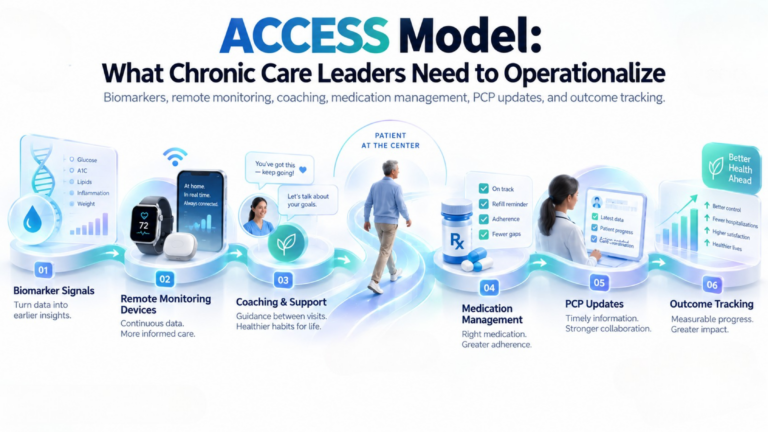
ACCESS Model: What Chronic Care Leaders need to Operationalize
The CMS ACCESS Model has moved from policy concept to operating reality. […]
 Articles
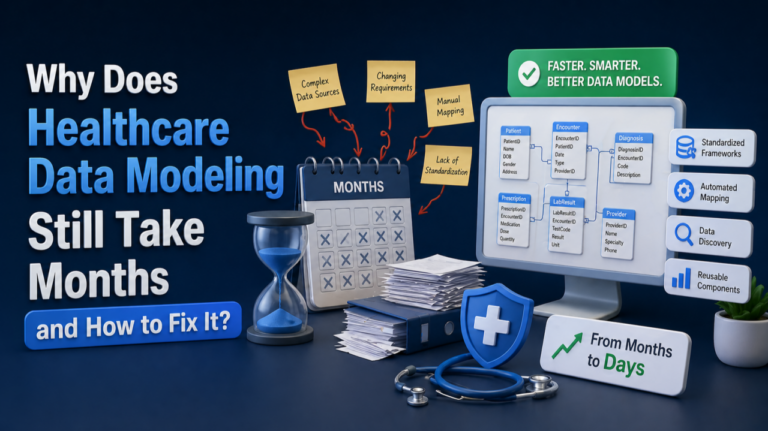
Why Healthcare Data Modeling Takes So Long and How to Fix It
Every healthcare data leader knows the drill. Clinical leadership asks for a […]
 Articles
Why Care Management Programs Struggle to Deliver Better Outcomes
Here’s a pattern we have seen more often than we should. A […]